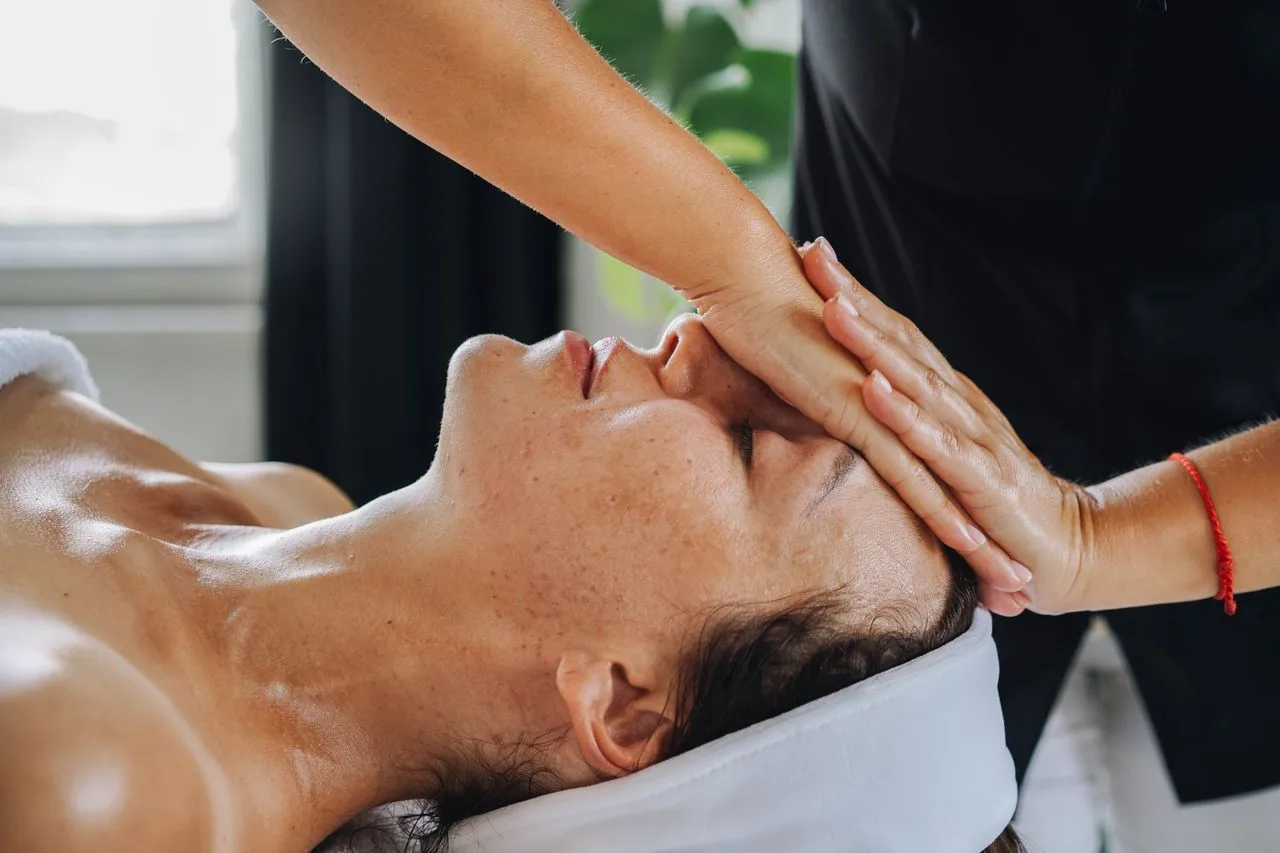
Facial package pricing: single sessions or courses, done properly
A practical guide to facial package pricing for facialists: whether to sell courses, how to price them, and how to avoid discounting yourself thin.
By The Wunderhand team ·
A client asks about a course of six facials before she's even had one. You quote a number off the top of your head, knock off a bit because it sounds fair, and six months later you're doing double the work for the same money you charged before you started offering courses. Facial package pricing goes wrong in exactly that moment — not because courses are a bad idea, but because the maths gets decided on the spot instead of in advance.
Why courses get sold in the first place
Courses solve a real problem. Skin work is cumulative — a course of microneedling or a run of peels does more than one session ever will, and you know that better than the client does. Selling the course gets her committed to the results, not just the one appointment. It also fills your diary for months rather than one Tuesday.
The trouble is that "course" has become shorthand for "discount," because most facialists price the course backwards: they take the single price, guess a saving that sounds generous, and multiply. That's how you end up doing session six at a price that doesn't cover your product cost, let alone your time.
Price the single session properly first
Before you touch a course, your single-session price has to already cover everything: your time, your product, your rent or chair cost, and a margin left over. If that number is wrong, every course built on top of it is wrong too, just wrong six times over.
Work it out properly, in writing:
- Time: the full slot, not just the treatment — cleanse, extraction, mask, consultation, the lot.
- Product: what actually goes on the skin, not a guess. A course of six using a £14 ampoule per session is £84 in product alone.
- Overheads: your share of rent, laundry, insurance, kit depreciation.
- Margin: what's left, and whether it's enough per hour to be worth doing.
If a single facial at £65 barely clears £20 once product and overheads are out, a course price built on a steep discount off £65 is heading towards zero, or below it.
How to price the course without giving it away
A course should save the client something for committing, and save you something in admin and no-shows, because she's already paid and already scheduled. It should not save her so much that you're subsidising her skincare.
A workable way to think about it, as an example only:
- Single session: £65.
- Six-session course: instead of guessing a headline saving, price it as five sessions and a half — £65 × 5.5 = £357.50, rounded to £360.
- That's a genuine saving against six full-price sessions (£390), worth roughly £30 across the course — noticeable, but nowhere near half price.
Compare that with the common shortcut — "buy five, get one free" — which on a £65 facial gives away a full £65 session, nearly 17% off the whole course. That's a much bigger discount than most facialists actually intend when they say the phrase out loud. Decide the number you're comfortable losing, then work out what wording produces it — not the other way round.
Build in the cost of the client vanishing
A course paid in full up front, then abandoned after two sessions, isn't free money — it's four sessions of product and slot you're now not delivering, sitting as a liability against your time. Structure it so a lapsed course doesn't cost you:
- Take a deposit per session at the point of booking, not one deposit for the whole course, so each appointment is separately secured.
- Set an expiry on the course (three or six months) so it isn't sitting open a year later when your prices have moved on.
- Decide your policy on a missed session up front — refundable, forfeit, or moved to the next slot — and say so before she pays, not when she asks.
Wunderhand takes a deposit per service before a booking is confirmed, so each session in a course gets its own deposit at the point of booking, into your own Stripe account, on the cancellation rules you set. If she cancels in time, she gets it back automatically; cancel late and you keep it, without a conversation.
Single sessions still have a place
Not everyone wants a course, and you shouldn't need to push one to make the single price work. If a facial priced properly on its own covers your time and product with margin left over, a client who only ever wants one facial a year is still a profitable appointment. The course is an option for people committing to a programme of skin work, not a way to make the single price viable by cross-subsidy.
A useful test: could you run your diary on single sessions alone and still be paying yourself properly. If the answer's no, the problem isn't that not enough people are buying courses — it's that the single price is too low, and no amount of course-selling fixes that.
Multi-session work needs one deposit, one balance
A course is one piece of work with several visits, not six separate bookings that happen to be with the same client. Tracking it that way matters when it comes to money: you want to see, at a glance, how many sessions are left, what's been paid, and what's outstanding, without cross-referencing six calendar entries.
Wunderhand tracks multi-visit work — a course of facials, a run of tattoo sittings, long colour work — as one piece with one deposit and a running balance, so you can see where a client is in her course without doing the sums by hand each time.
Putting a number on the page
Whichever way you price it, the client needs to see the terms before she pays — what the course costs, what happens if she misses a session, and how long it's valid for. Wunderhand gives every facialist a free public booking page where services, courses and deposit rules sit in plain view, so nobody's agreeing to something you have to explain afterwards.
If you're setting this up from scratch, check what a course of six actually needs to earn against a single session before you write the number down anywhere a client can see it — the pricing page is a reasonable place to start thinking about what the subscription side of running this costs, separately from what you charge your clients.
More from the blog
- Braider pricing by style: a length and complexity grid that ends guessingA simple way for braiders to price by length and complexity, so every quote is consistent and no sitting is underpriced.17 October 2026
- How to raise salon prices without losing clientsA practical script and timeline for raising your salon prices without emptying the diary, with a worked example.2 October 2026

- Chair rental vs own salon: what changes for an independent hairdresserChair rental vs own salon compared: the real weekly costs, who owns the client list, and how much control you actually get.23 September 2026